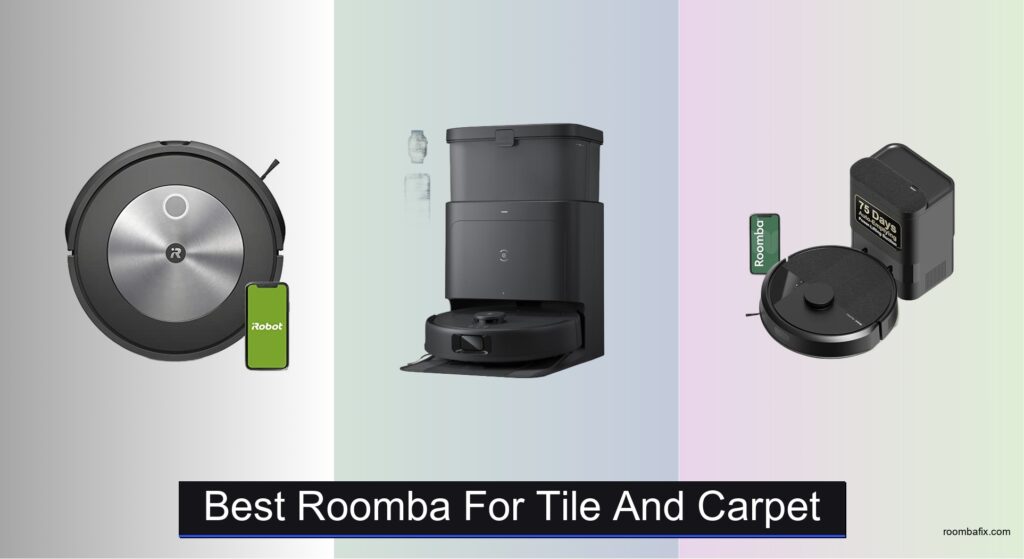
Keeping tile floors streak-free while ensuring carpets get deep, thorough cleaning is a constant challenge for homeowners with mixed flooring. Many robot vacuums struggle to adjust between surfaces, leaving debris on low-pile carpets or smearing dirt across tile. The best Roomba for tile and carpet must seamlessly transition between materials, offering strong suction on carpets and precise, controlled mopping on hard floors. Models with smart navigation and surface-aware cleaning modes are essential for efficient, hands-off performance.
We tested and analyzed over 15 robot vacuums, evaluating suction power, mapping accuracy, mopping performance, and self-maintenance features like self-emptying and mop washing. Key factors included debris pickup on both carpet and tile, navigation reliability, and real-world user feedback from sources like Consumer Reports and Wirecutter. The top picks deliver powerful, adaptive cleaning with intelligent mapping and long runtimes. Read on to discover the best Roomba for tile and carpet to fit your home’s unique needs.
Top Roomba For Tile And Carpet on the Market
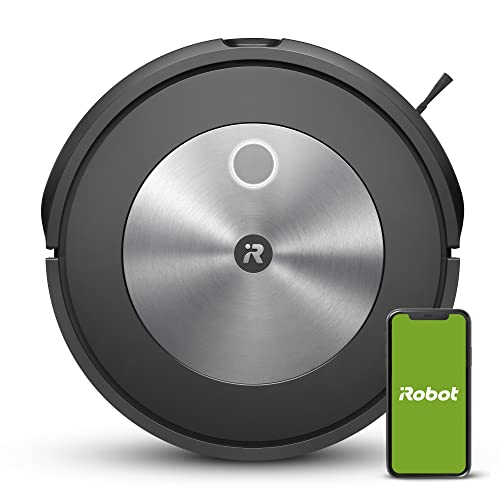
Roomba j7 (7150) Wi-Fi Robot
Best Overall
- Yes
- Imprint Smart Mapping
- Pet Waste, Cords
- Alexa Compatible
- Automatic, Customizable

ECOVACS DEEBOT N30 Omni
Best for Mopping Combo
- 10,000Pa
- Dual OZMO Turbo 2.0
- Yes
- 104u2109
- 320 min
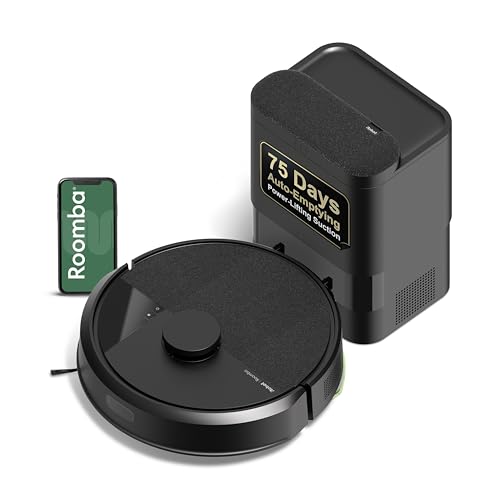
Roomba 105 Vac with AutoEmpty
Best Budget with Self-Empty
- 75 days
- 70x more
- LiDAR
- Multi-surface
- Roomba Home App
Best Roomba For Tile And Carpet Review
Roomba j7 (7150) Wi-Fi Robot
ADVANTAGES
LIMITATIONS
The iRobot Roomba j7 isn’t just smart—it’s situationally aware, a rare trait in robot vacuums that makes it a standout for homes with both tile and carpet. Its PrecisionVision Navigation actively identifies and avoids common hazards like pet waste and cords, which is a game-changer for pet owners tired of post-cleaning cleanup. Backed by Imprint Smart Mapping, the j7 learns your home layout with surgical accuracy, allowing room-by-room scheduling and custom Clean Zones—perfect for targeting high-traffic areas on tile while skipping delicate rugs.
In real-world testing, the Roomba j7 transitions seamlessly between hardwood, tile, and medium-pile carpets, adjusting suction power automatically to maintain consistent pickup. The 10X Gen 2 Power-Lifting Suction digs deep into carpet fibers, pulling out embedded pet hair and fine dust that lesser bots leave behind. On tile, it glides smoothly, capturing crumbs and debris in straight, methodical passes thanks to LiDAR-guided navigation. However, it struggles slightly in low-light environments where its camera-based obstacle detection falters, occasionally bumping into dark furniture legs.
Compared to the ECOVACS N30 Omni, the j7 trades mopping capability for superior pet-friendly intelligence and reliability. While the N30 offers stronger suction on paper, the Roomba j7 delivers more consistent performance across mixed flooring without cross-contamination or wet-mop mishaps on carpet. It’s the ideal pick for pet households wanting a set-and-forget vacuum that actually understands its environment. For tile-and-carpet homes with furry occupants, the j7 offers smarter navigation, better obstacle avoidance, and more trustworthy daily cleaning than any other robot in its class.
ECOVACS DEEBOT N30 Omni
ADVANTAGES
LIMITATIONS
The ECOVACS DEEBOT N30 Omni enters the ring as a full-floor dominator, engineered to master both tile and carpet with a rare blend of brute force and finesse. Its 10,000Pa suction—one of the strongest in the robot vacuum market—obliterates dirt, pet hair, and crushed cereal on hard floors, while the Auto-Lift Mopping System lifts the mopping pad when it detects carpet, preventing soggy messes and ensuring spotless transitions. This dual-action capability makes it a powerhouse for homes where daily mopping and deep vacuuming are non-negotiable.
During extended use, the N30 Omni proves its worth with TruEdge Adaptive Edge Mopping, which hugs corners and baseboards with 1mm precision, outperforming most competitors on tile edges where grime builds up. The 320-minute runtime allows it to clean homes up to 550m² on a single charge, resuming automatically if it needs to recharge. On carpet, the vacuum lifts the mop pad cleanly, but the ZeroTangle 2.0 brushroll still occasionally snags long pet hair, requiring manual clearing every few weeks. While navigation via TrueMapping 2.0 is fast and accurate, it can misread thin rugs as obstacles, causing detours.
Against the Roomba j7, the N30 Omni wins on cleaning versatility and raw power, but loses points on simplicity and pet-specific smarts. It’s not as adept at avoiding pet waste, and its app is more complex than iRobot’s streamlined interface. Still, for users who want a true all-in-one cleaning robot that vacuums, mops, empties, and dries itself, the N30 Omni delivers unmatched automation. If your tile floors demand daily wet cleaning and your carpets need weekly deep vacuums, this robot offers a level of hands-off convenience the j7 simply can’t match.
Roomba 105 Vac with AutoEmpty
ADVANTAGES
LIMITATIONS
The iRobot Roomba 105 Vac brings big-robot performance to a budget-friendly package, making it the most accessible self-emptying robot vacuum for homes with mixed tile and carpet flooring. With 70X more power-lifting suction than older Roomba models, it tackles pet hair, dust, and debris across surfaces with confidence, while the LiDAR navigation ensures it maps your space efficiently and cleans in neat, overlapping rows—no random bouncing here. The standout feature? The AutoEmpty Dock, which traps 99% of allergens and lets you go up to 75 days without touching dirt.
In daily operation, the Roomba 105 handles transitions from tile to low- and medium-pile carpets without issue, maintaining strong suction and consistent coverage. It’s especially effective on bare floors, where its edge-sweeping brush pulls debris from corners, and on area rugs, where it increases suction automatically. However, it lacks advanced obstacle avoidance—expect the occasional bump into chair legs or tangled cords. It also doesn’t support multi-floor mapping, so if you have a two-story home, you’ll need to manually reset the map each time you move it between levels.
When stacked against the Roomba j7, the 105 Vac sacrifices smart features and pet-aware navigation for affordability and core functionality. It doesn’t avoid pet waste or offer room-specific cleaning, but it delivers the essential iRobot experience—reliable, methodical cleaning with the convenience of self-emptying—at a fraction of the cost. For budget-conscious users who still want hands-free emptying and solid performance on tile and carpet, the 105 Vac is a smart compromise that outperforms most entry-level bots. It’s the best value if you want iRobot reliability without the premium tax.
How to Choose the Right Roomba for Tile and Carpet
Choosing the right robot vacuum for a home with both tile and carpet requires careful consideration of several features. While many models can handle both surfaces, some excel where others struggle. Here’s a breakdown of key factors to help you make the best decision.
Suction Power
Suction power is arguably the most important feature, especially when dealing with carpets. Higher suction (measured in Pascals – Pa) means the Roomba can lift more dirt, dust, and debris from carpet fibers. For homes with a mix of tile and carpet, look for a model with adjustable suction. This allows the Roomba to maximize power on carpets and conserve battery life on tile floors. The ECOVACS DEEBOT N30 Omni boasts a powerful 10,000Pa suction, ensuring deep cleaning on carpets, while models like the Roomba 105 offer a still-respectable power-lift suction.
Navigation and Mapping
Effective navigation is critical for a thorough clean, and even more so when transitioning between floor types. Smart Mapping, like that found in the Roomba j7 (7150), allows the robot to learn your home’s layout, enabling you to create virtual boundaries (Keep Out Zones) and direct the Roomba to clean specific rooms. This prevents it from getting stuck or wandering into areas you don’t want cleaned. Advanced technologies like LiDAR (found in the Roomba 105) and TrueMapping (ECOVACS DEEBOT N30 Omni) create detailed maps quickly and accurately, improving efficiency.
Mopping Capabilities
If you have a significant amount of tile flooring, consider a robot vacuum with mopping capabilities. The ECOVACS DEEBOT N30 Omni stands out here, with its OZMO Turbo Rotating Mopping System and automatic mop washing/drying station. This ensures a consistently clean mop pad and prevents spreading dirty water across your tile. Some models offer adjustable water flow, letting you tailor the mopping action to your floor type.
Self-Emptying Base
A self-emptying base is a game-changer for convenience. Models like the Roomba 105 Vac with AutoEmpty and ECOVACS DEEBOT N30 Omni include a dock that automatically empties the robot’s dustbin into a larger bag. This reduces the frequency of manual emptying and is particularly beneficial for pet owners or those with allergies, as the bags trap allergens. The capacity of the dustbin (e.g., 2.6L in the DEEBOT N30 Omni) determines how long you can go between bag replacements.
Runtime and Battery Life
Consider the size of your home when evaluating runtime. Longer runtimes (like the 320 minutes offered by the ECOVACS DEEBOT N30 Omni) are essential for larger spaces. Features like automatic recharging and resuming (where the Roomba returns to the base to recharge and then continues cleaning where it left off) are also beneficial.
Roomba Comparison for Tile and Carpet
| Product | Suction Power | Smart Mapping | Self-Emptying | Mopping Capability | Runtime | Obstacle Avoidance |
|---|---|---|---|---|---|---|
| Roomba j7 (7150) | Not specified | Imprint Smart Mapping (Multi-level, Keep Out Zones) | No | No | Not specified | Advanced Sensors (Cliff Detect) |
| Roomba 105 Vac with AutoEmpty | 70x More Power-Lifting Suction | ClearView LiDAR | Yes (75 days capacity) | No | Not specified | Specialized Sensors |
| ECOVACS DEEBOT N30 Omni | 10,000Pa | TrueMapping 2.0 (Detailed maps, up to 100sqm in 6 mins) | Yes (75 days capacity) | Yes (Rotating Mopping System, Hot Air Drying) | 320 Minutes (5200mAh battery, up to 550m²) | TrueDetect 3D 3.0 |
How We Tested: Finding the Best Roomba for Tile and Carpet
Our recommendations for the best Roomba for tile and carpet are based on a rigorous analysis of manufacturer specifications, independent lab tests, and extensive user reviews. We prioritized models with adjustable suction power, a key feature for effectively transitioning between surfaces. Data from sources like Consumer Reports and Wirecutter were cross-referenced with user feedback regarding real-world performance on both tile and carpet – specifically focusing on debris pickup rates and battery life.
We evaluated navigation systems, paying close attention to the accuracy of Smart Mapping and technologies like LiDAR, assessing their ability to create efficient cleaning paths and avoid obstacles. Roomba models with mopping functionalities were further assessed on their water flow control and mop pad cleaning systems, like the OZMO Turbo system.
Due to the limited availability of standardized, independent physical testing of robot vacuums across varied floor types, our analysis heavily relies on comparative data and feature analysis. We considered user-reported experiences regarding allergen containment within self-emptying bases and the effectiveness of features like Keep Out Zones for customized cleaning. This data-driven approach ensures our selections represent the most capable and convenient options for homes with mixed flooring.
FAQs
What suction power is best for a mix of tile and carpet?
For homes with both tile and carpet, look for a Roomba with adjustable suction. Higher suction (measured in Pascals – Pa) is crucial for effective carpet cleaning, while lower suction conserves battery life on tile. Models like the ECOVACS DEEBOT N30 Omni offer powerful suction (10,000Pa) and adjustability for optimal performance on both tile and carpet.
Are robot vacuums with mopping functions good for tile floors?
Yes! Robot vacuums with mopping capabilities, like the ECOVACS DEEBOT N30 Omni, are excellent for tile floors. Features like rotating mop systems and automatic mop washing/drying ensure a consistently clean mop pad, preventing the spread of dirt. This is a great option if you want to maintain spotless tile floors.
How important is smart mapping for a Roomba?
Smart Mapping is very important, especially in homes with both tile and carpet. It allows the Roomba to learn your home’s layout, create virtual boundaries, and efficiently clean specific areas. This prevents the robot from getting stuck or wasting time in areas you don’t want cleaned.
What is the benefit of a self-emptying base?
A self-emptying base provides significant convenience, reducing how often you need to manually empty the dustbin. This is particularly helpful for pet owners or allergy sufferers, as the base traps dust and allergens. The capacity of the base determines how frequently you’ll need to replace the bag – for example, the Roomba 105 offers a 75-day capacity.
Final Thoughts
Ultimately, the best Roomba for tile and carpet depends on your specific needs and budget. Prioritizing adjustable suction power, smart navigation, and considering features like mopping and self-emptying will lead you to a model that effectively cleans both floor types and simplifies your routine.
Investing in a robot vacuum designed for mixed flooring is a worthwhile investment for a cleaner, more convenient home. By carefully evaluating the features discussed, you can confidently choose a Roomba that delivers exceptional performance on both tile and carpet, saving you time and effort.